Monday, June 7, 2010

Brookfield Conservation Park

Yesterday I went to Brookfield Conservation Park to check out how the mallee was looking after the recent rains we've been havining. It is in great shape, and looking very green. It was a cold start, 5C (41F) when I left Adelaide, but by the time I got to the Barossa Valley it was down to freezing point and the local hot air balloonists were taking advantage of the cold still conditions. Brookfield is about a 90 minute drive North East of Adelaide and has been conserved mainly due to its population of Wombats. These nocturnal animals live in burrows and the park is littered with them. This one had fresh diggings in it. It started to drizzle while I was watching a small group of Tree Martins, and I managed to get a few close shots of them and also of the ever present Yellow-plumed Honeyeater. Just as I was about to move on, I heard the call of a couple of Brown Treecreepers. Oddly for a treecreeper, browns spend a lot of time foraging on the ground. I took a couple of shots, but the best was in a tree, where they should be! The park has two circular nature drives each of around 10Km (6 miles) and I headed round the Mallee drive stopping anywhere I saw or heard anything. I spotted a pair of Mallee Ringnecks prospecting nest holes, lots of Red-capped Robins, and also groups of Varied Sittela noisily feeding. As the park is pretty big, and largely undisturbed (I saw no-one else the whole time I was there) it has a healthy kangaroo population too. I saw a few Red Kangaroos and plenty of Western Grey Kangaroos.

Wednesday, June 2, 2010

Victoria Square, Adelaide

The city of Adelaide is surrounded by a wide green belt of parklands, but also has a number of squares in the CBD. The largest and most central of these is Victoria Square. Victoria square was named after Princess Victoria, just a few months before she became Queen. The aboriginal name is Tarndanyangga. The Australian and Aboriginal flags fly here throughout the year. The fountain is meant to depict the three rivers from which Adelaide gets most of it's water, the Torrens, the Onkaparinga and the Murray. The square is in the absolute centre of the city and is a busy junction of the main north-south and east-west routes, and also a major public transport hub. There are a number of important, historical buildings around the square. This is the main post office. and this is the Catholic Cathedral of St. Francis Xavier. Around the square are also a number of statues commemorating great South Australians like the explorer Charles Sturt who whilst exploring from the east coast westwards discovered that all of the great rivers converged into the Murray. The main north-eastern highway from Adelaide towards Sydney is named after him. This is John McDouall-Stuart, who made the second crossing from the south to north coasts of Australia. He blazed the trail for the Adelaide to Darwin telegraph, and the main highway north from Port Augusta to Darwin is named after him. This is Charles Cameron-Kingston an early Premier of South Australia.

Friday, May 28, 2010

Skywatch Friday

Not really a sky photo, but I love the way the sun's rays come through the trees.

Tuesday, May 25, 2010

Texas 2002 - From the archives

Last weekend was tied up completely with domestic duties, and then it rained, so I didn't manage any birding at all. I am following a few blogs from America, and recent posts regarding spring migration there reminded me of my trip to Texas in April 2002 with Birdseekers holidays. This was my first birding trip to USA, so I knew I was in for a great trip!! We started at Houston, then headed southwest to Rockport, west along the coast, up the Rio Grande, then to Edwards Plateau before turning East back towards Houston. My trip report, as used by Birdseekers on their website, is here. Back in 2002 I was using a 3MP Nikon Coolpix E995, mostly digiscoping with my Kowa TSN823 (both of which I still have). Looking at the shots now, you can really see how far nature photography has come in a very short time. Many thanks to Kelly, Mary and Kathy for reminding me of this great trip and inspiring this post through their great blogs. Here are a few shots taken on that trip. They are not in any particular order. On the trip I saw my first wild Alligator Our guide spotted some Barred Owls My first Skimmer. I had heard about the Scissor-tailed Flycatcher, and it certainly lived up to it's reputation - beautiful! Red!! (for Kelly!) The Green Jay was also stunning Golden-fronted Woodpecker Plain Chachalaca My first Hummingbirds - Black-chinned Seeing around 12 Million Mexican Free-tailed Bats emerging from their cave at dusk was the highlight of the trip for me. Rufous Hummingbird And searched for and eventually saw the striking Golden-cheeked Warbler. Ash-throated Flycatcher Harris' Hawk

Friday, May 21, 2010

Skywatch Friday

Autumn skies over the Adelaide Hills, South Australia

Saturday, May 15, 2010

Parrot Identification

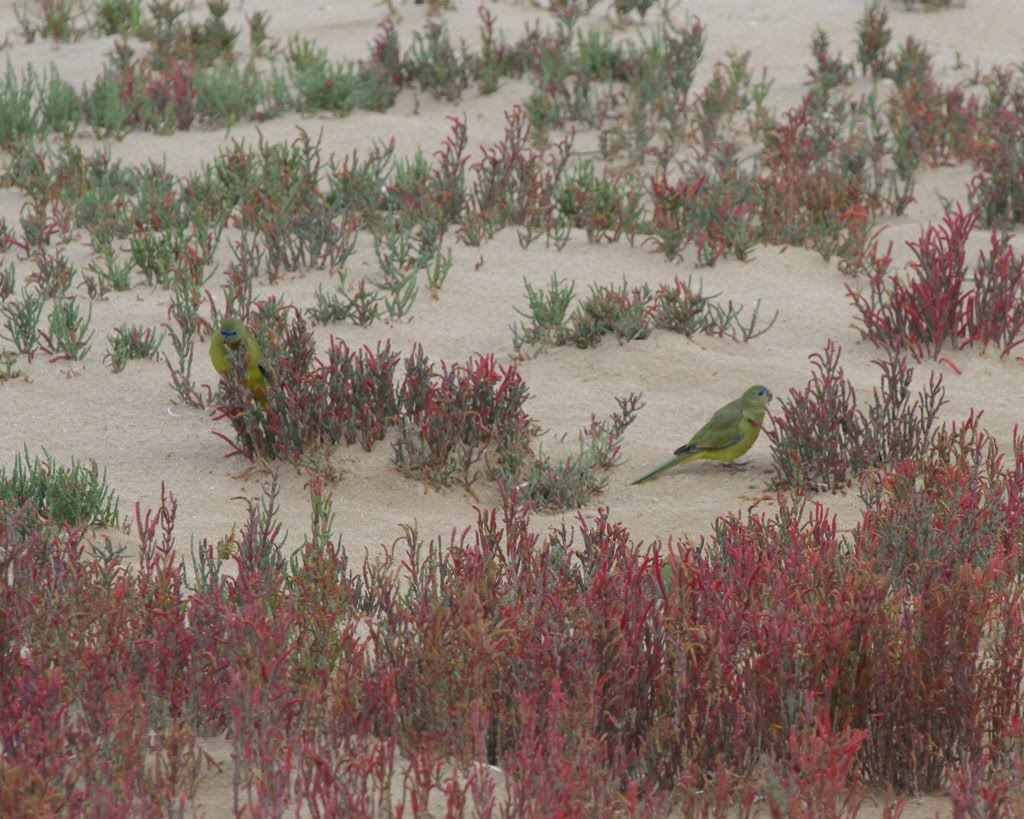
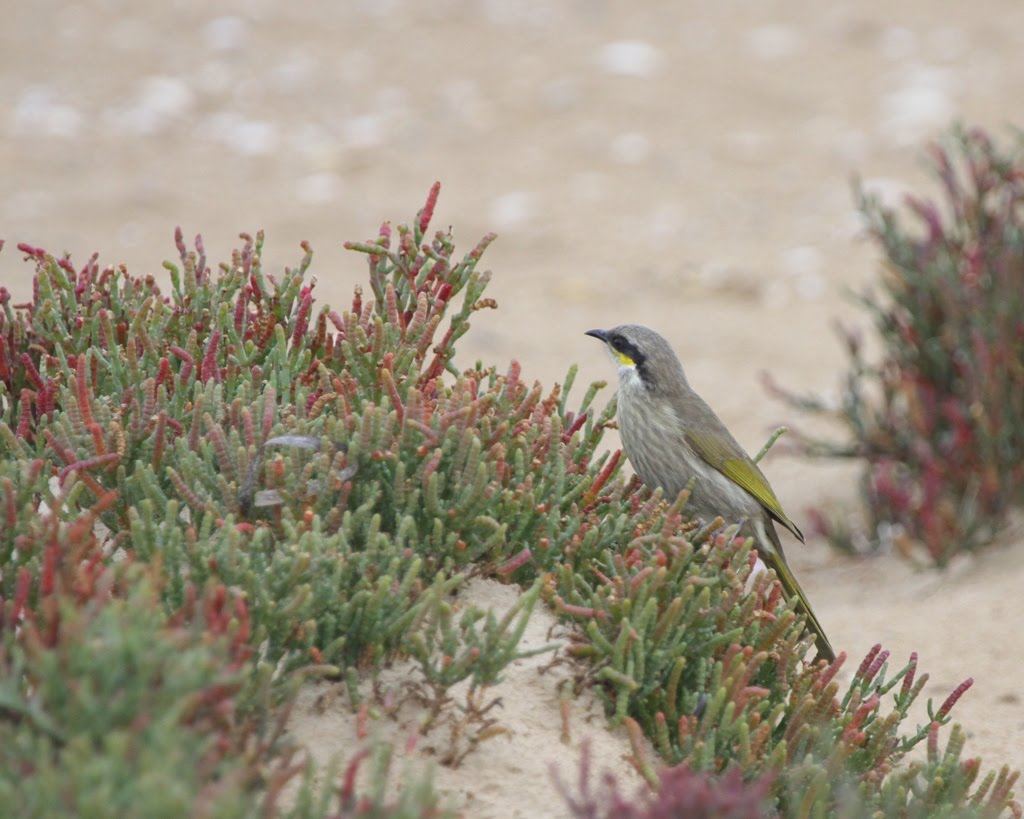
Today I attended a workshop in Goolwa. On the way I spotted a raptor sitting in a pine tree. It was one of the more common Australian raptors, a Whistling Kite. Outside the church hall where the workshop was held was a large flowering eucalypt. It was full of New Holland Honeyeaters. The workshop was hosted by the Department for Environment and Heritage, and concerned the critically endangered Orange-bellied Parrot. This parrot is on the verge of extinction with only 50 birds left in the wild (all of which breed at one site in Tasmania)and approximately 200 in captivity. The reintroduction of captive birds at a second site in Tasmania has been suspended as it was not successful. You can read more about the OBP here. The workshop was held to help people identify OBP from the other three common similar species in the area, Elegant Parrot, Rock Parrot and Blue-winged Parrot in preparation for the first of three winter surveys. After the workshop, we all went to Hindmarsh Island to look for parrots. OBP has been recorded here in the past, but we were not expecting to see any and were not disappointed. Hindmarsh Island is at the northern end of the Coorong National Park, and the area we visited was an area of saltmarsh and Samphire. We found at least five Rock Parrots here, and I managed a few shots, but they are highly cropped, so apologies for the quality. There were also a few Singing Honeyeaters here. A short distance away we also saw some Elegant Parrots. They were too far away to be photographed, so here is one I photographed a couple of years ago. Finally, on the way home I spotted an Australian Black-shouldered Kite, and as I watched he caught some prey, which the female then took from him. I have not seen this behaviour in Black-shouldered Kites before. Oh, when I said we didn't see an OBP, I was not quite telling the whole truth, as we did see one..............