This afternoon, Maryann and I popped into Laratinga Wetlands at Mount Barker in the Adelaide Hills.
As we strolled around, there were plenty of birds to see. First bird was a Yellow-billed Spoonbill, fast asleep in the sun.
Water levels were low in some ponds, but the boardwalks helped get close to the birds. Dusky Moorhens were everywhere, and a pair of "mixed up mallards" were keeping a close eye on their brood.
Not so many Common Coots in the shallows, but there were plenty in the deeper water. I counted over 20 Spotted Crakes, and some were very confiding.
The only parrot we saw were Adelaide Rosellas. Another birder had mentioned he'd seen some Freckled Ducks, and we eventually found one on a log with a Grey Teal and a Hardhead for company.
The next pond held lots of birds, and we quickly ticked off Chestnut Teal and Australian Little Grebe.
A small movement in the reeds betrayed this Australian Reed Warbler, but the Hoary-headed Grebes were much more conspicuous against the dark water.
Then I flushed a small crake. My immediate thought was a Baillon's, but it disappeared before I could see it properly. On the way back, it was at the same spot, and I trod a little more carefully!! ID confirmed, and duly photographed!! A Baillon's Crake.
On the way back to the car we passed this fluffed up White-faced Heron, some Purple Swamphen's and a single Hardhead.
As its been so hot here, we've been going to the beach in the morning. Of course, we also took Kobe with us. He loved playing with his ball in the sea.
Happy New Year to all my blogging friends. I wish you and yours the very best for a safe, happy and healthy 2013. These are some of the fireworks celebrating the arrival 2013 in Adelaide
Today I met up with Chris Steeles for a few hours Birding in Birdlife Australia's Gluepot Reserve deep in the South Australian mallee.
It was pretty quiet when we arrived, but we did find some spots that were busy with birds. Just off the Mallefowl walk we found a Shy Heathwren (Shy Hylacola) and a Chestnut Quail-thrush.
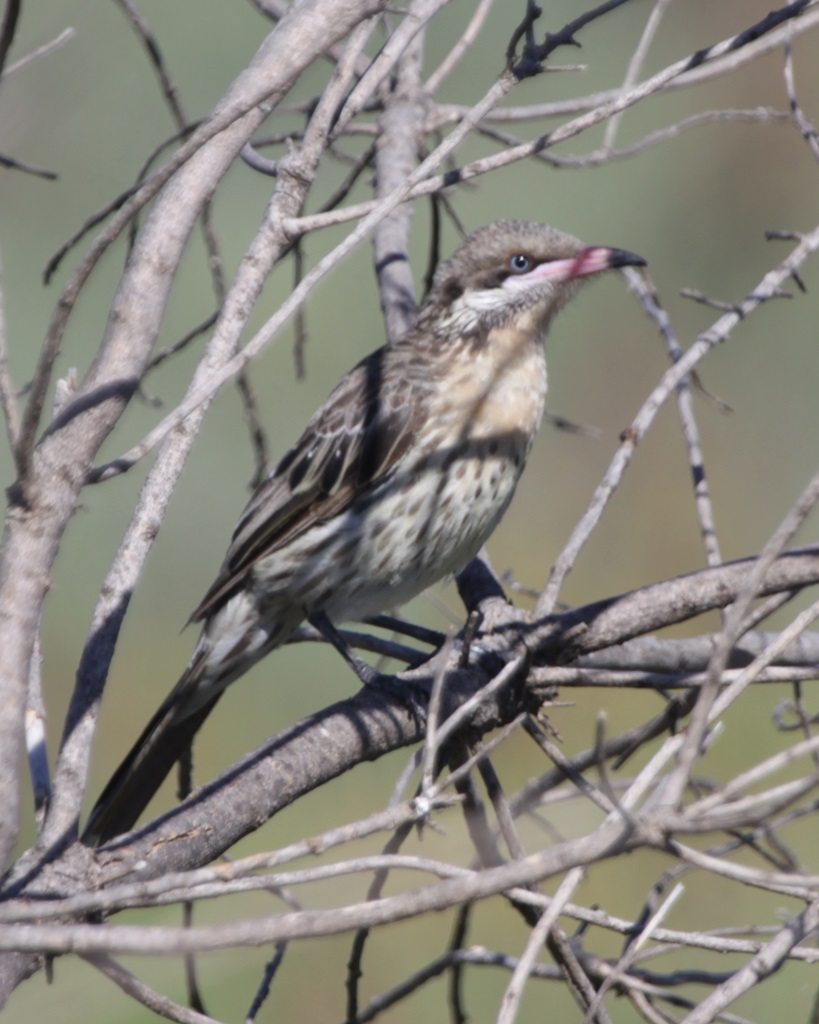
Then further on at Grasswren Tank, there was a busy watering station, with Spiny-cheeked Honeyeaters, Brown-headed Honeyeaters, Yellow-plumed Honeyeaters and a Grey Currawong all coming to drink in quick succession.
On Boxing Day I went to St. Kilda Saltfields to see what migrant waders I could find. It was very quiet, and the usual spots had very few birds at all.
This young Australian Shelduck wasn't nervous enough to take to the wing, but made sure he kept close to mum and dad.
I spotted this Red-capped Plover on the salt build up on the edge of the lagoon, but I hadn't noticed the other one until I almost ran her over! She was in the same spot when I left a few hours later, so I assume she has a nest nearby.
Also along the lagoon edges were a few Sharp-tailed Sandpipers and Red-necked Stints, but numbers were very low compared to previous visits.
Next stop was a small bush where I heard White-winged and Superb Fairywrens calling, but as soon as I stopped this Willie Wagtail took up his post on the top of the bush and scolded me roundly!! no sign of the fairywrens after that.
There were plenty of Whiskered Terns, but true to form they were difficult to photograph.
Further on there was a single Spiny-cheeked Honeyeater, and then a Pelican who promptly took flight.
It must have been a day for singles, as around the next bend was a single Red-necked avocet, and on the way out a Pied Cormorant with a fishermans hook caught in its beak.
Finally, I caught up with a flock of Banded Stilts.
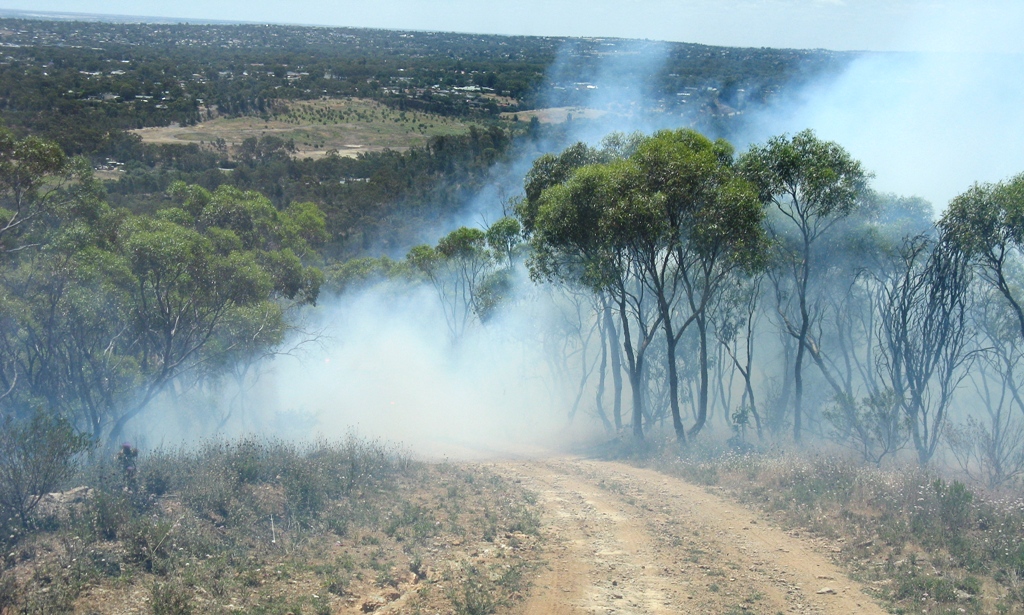
This weekend I was on a prescribed burn at Ambers Gully in Blackhill Conservation Park. This burn was on a steep ridge, and was required to reduce the fuel load in the case of a bushfire. The area we were burning is the whole of the ridge on the right of the photo below.
We met at the head of the gully, and shortly after, the burn commenced from the highest point moving downwards in both directions.
The burn was progressing well, and we soon we had smoke in front and behind our appliance.
I was crewed on "Mount George QRV" a Toyota Land Cruiser equipped with a 400 litre tank,with a pump and hose reel. This is a "Quick Response Vehicle" and is used to quickly establish a response in the event of a bush fire. We had to ensure that the fire did not cross the track that marked the eastern edge of the burn.
This edge was to provide a 30 metre burnt buffer zone to prevent the main fire from spreading to unplanned areas. There was soon plenty of smoke, and the 30 metre buffer was soon completed.
This was the signal for the helicopter, a Eurocopter Ecureuil, to begin dropping incendiaries into the heart of the target area, which was soon well alight.